
 KOR
KOR ENG
ENG CHN
CHNLifting
My face looks swollen after a lifting treatment. Is that okay?
When you look in the mirror, your cheeks seem fuller than before the treatment, and the skin may feel slightly warm to the touch. This is the point where you may worry about whether something is wrong and whether it is fine to carry on as usual.
After energy-based lifting, the skin and the tissue beneath it react to the heat, and mild swelling can appear. This article sorts out which changes can simply be watched and which call for contacting the clinic right away.
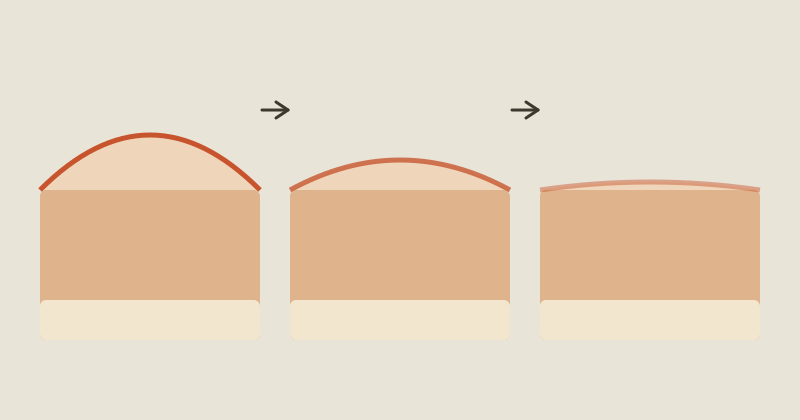
Why does my face swell after treatment?
When heat energy reaches the deeper layers of the skin, the tissue in that area reacts to the stimulation. During this process, fluid may temporarily collect, causing swelling or warmth. This is often seen as part of the body starting to recover.
How much the face swells, and where, differs from person to person depending on skin thickness, the treated area, the energy level, and whether you tend to swell easily. Even after the same treatment, some people hardly notice anything, while others notice clear swelling for about two days.
How does the swelling usually change?
Individual differences are large, so the table below is a general course given for reference. The timing may be earlier or later depending on the type and intensity of the treatment.
| Timing | Common state | What to look at alongside |
|---|---|---|
| Day of treatment | Mild warmth, slight swelling | Whether daily activities are possible |
| 1-3 days | Swelling often decreases gradually | It may look more swollen in the morning |
| Around 1 week | It often becomes hardly noticeable | If it is still noticeable, contact the clinic |
When should I contact the clinic?
In the following cases, it is safer to contact the clinic where you were treated and have your condition checked rather than just waiting: pain that keeps getting worse, swelling that is unusually strong on one side or that actually grows, redness and warmth that spread over a wide area, or swelling that does not decrease after several days. Also contact the clinic right away if blisters or oozing appear, if you have a fever, if the skin color becomes unusually dark or pale, or if you feel numbness or have difficulty making facial expressions.
Massaging the area or applying hot compresses to reduce swelling may instead put extra strain on the skin, so it is better to follow the method the clinic advised first.
Frequently asked questions
Q. Can I use a cold compress to reduce the swelling faster?
A. Cooling makes some people feel more comfortable, but the advice may differ depending on the type of treatment and the area. Do not place ice directly on the skin, and it is safer to follow the method advised by the clinic first.
Q. Does swelling mean the treatment went well?
A. How much you swell varies with your constitution and skin condition, so it is hard to link it directly to the treatment result. Having no swelling is not a problem, and having swelling does not mean a better result.
Q. Is there anything to keep in mind before sleeping?
A. Some people feel there is less swelling in the morning when they sleep with the pillow slightly raised. However, individual differences exist, so if it is very uncomfortable, do not force it and consult the clinic.


